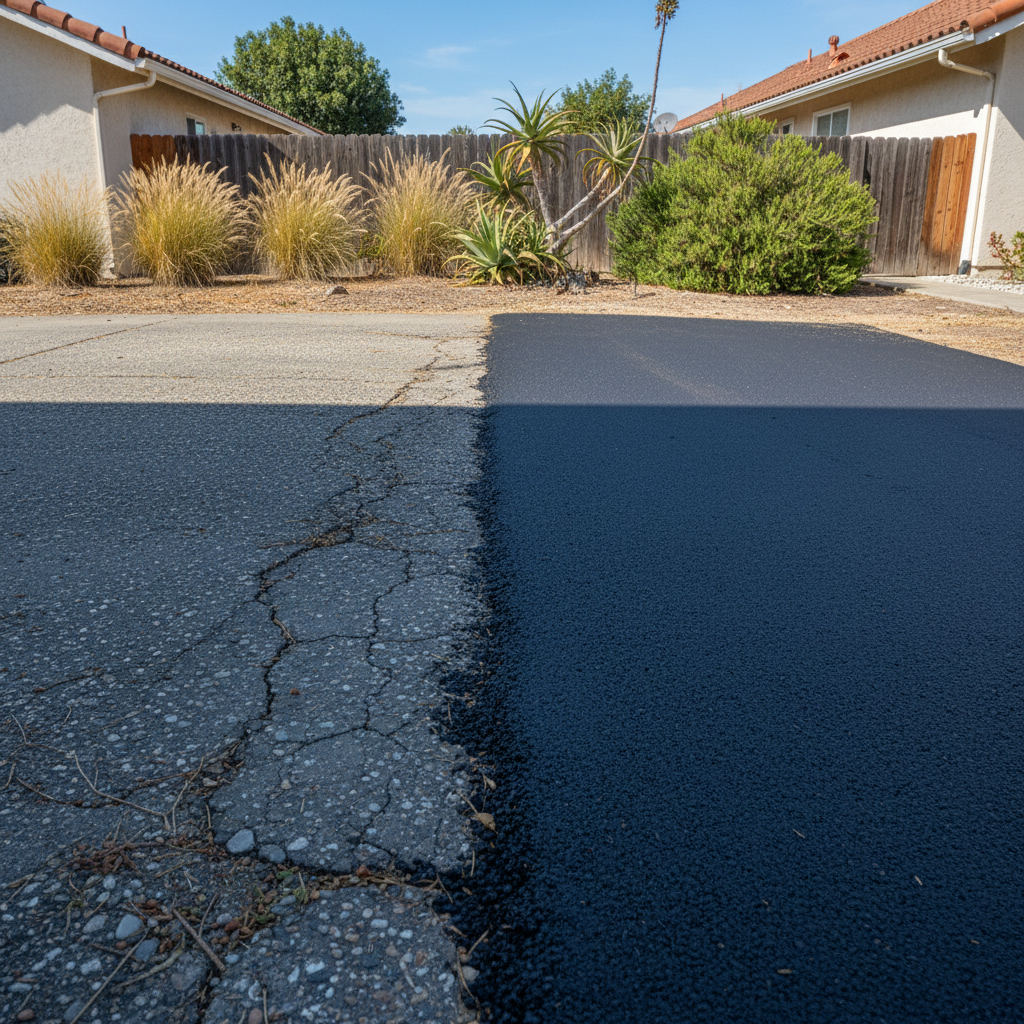
Your driveway's seen better days, huh? Maybe it's got more cracks than a dry lakebed, or it's just looking tired and worn out. When you're facing a beat-up asphalt driveway, you've generally got two main options: an asphalt overlay or a full repave. As someone who's been laying asphalt here in Oceanside for years, I've seen both done right and done wrong. Let's talk about what each one means for your home.
Asphalt Overlay: The Quick Fix (Sometimes)
An asphalt overlay, sometimes called a 'resurfacing,' is basically putting a new layer of asphalt right over your existing one. Think of it like a fresh coat of paint, but for your driveway. We'll clean the old surface, fill any major cracks, and then lay down a new, relatively thin layer of hot asphalt – usually about 1.5 to 2 inches thick. It smooths everything out and makes it look brand new.
Cost
This is usually the cheaper option upfront. Since we're not tearing out the old material, you save on demolition, hauling, and some labor costs. It's a significant saving, especially for larger driveways.
Durability & Lifespan
Here's the catch: an overlay is only as good as what's underneath it. If your existing asphalt has minor cracking and a solid base, an overlay can add another 8-15 years to its life. But if there are deep structural problems – like widespread alligator cracking, significant potholes, or a failing sub-base – those issues will eventually reflect through the new layer. It's like putting a new band-aid on a broken bone; it might look better for a bit, but the underlying problem is still there. We see this a lot in older homes in areas like Loma Alta, where the original driveways might be 40, 50 years old with bases that weren't built to modern standards.
Maintenance
Just like any asphalt, you'll want to sealcoat an overlay every 2-3 years to protect it from the sun and rain. Crack filling as new cracks appear is also crucial to extend its life.
Appearance
A freshly overlaid driveway looks fantastic. It's smooth, dark, and uniform. It'll boost your curb appeal, no doubt.
Full Repave: The Fresh Start
A full repave means we're tearing out your entire old driveway – all the asphalt, and sometimes even a portion of the base material if it's compromised. Then, we'll prepare a new, stable sub-base, lay down fresh aggregate, and finally, pave a brand-new asphalt surface, typically 2.5 to 4 inches thick, in two layers. It's a complete reconstruction.
Cost
This is the more expensive option. You're paying for demolition, hauling away debris, new base material, and more asphalt. It's a bigger investment upfront, but often a better long-term value.
Durability & Lifespan
When done right, a full repave gives you a truly new driveway. You're starting with a clean slate, ensuring a solid foundation. This means a much longer lifespan, often 20-30 years or more, especially if you keep up with maintenance. You won't have to worry about old cracks reappearing because the old material is gone. For homes near the coast, where the soil can get pretty saturated during our rainy season, a good, new base is critical for preventing future issues.
Maintenance
Similar to an overlay, regular sealcoating and crack filling are necessary to maximize its lifespan. But because the foundation is new and strong, you'll likely deal with fewer issues overall.
Appearance
Just like an overlay, a new repave looks pristine. The difference is that this pristine look is built on a solid, new foundation, so it's going to last a lot longer without developing underlying issues.
So, Which One Should You Choose?
Here's my honest take, based on what I see working with homeowners here in Oceanside:
- Go for an Overlay if: Your existing driveway has minor surface cracks, fading, or shallow potholes, but the overall structure feels solid. You don't see widespread