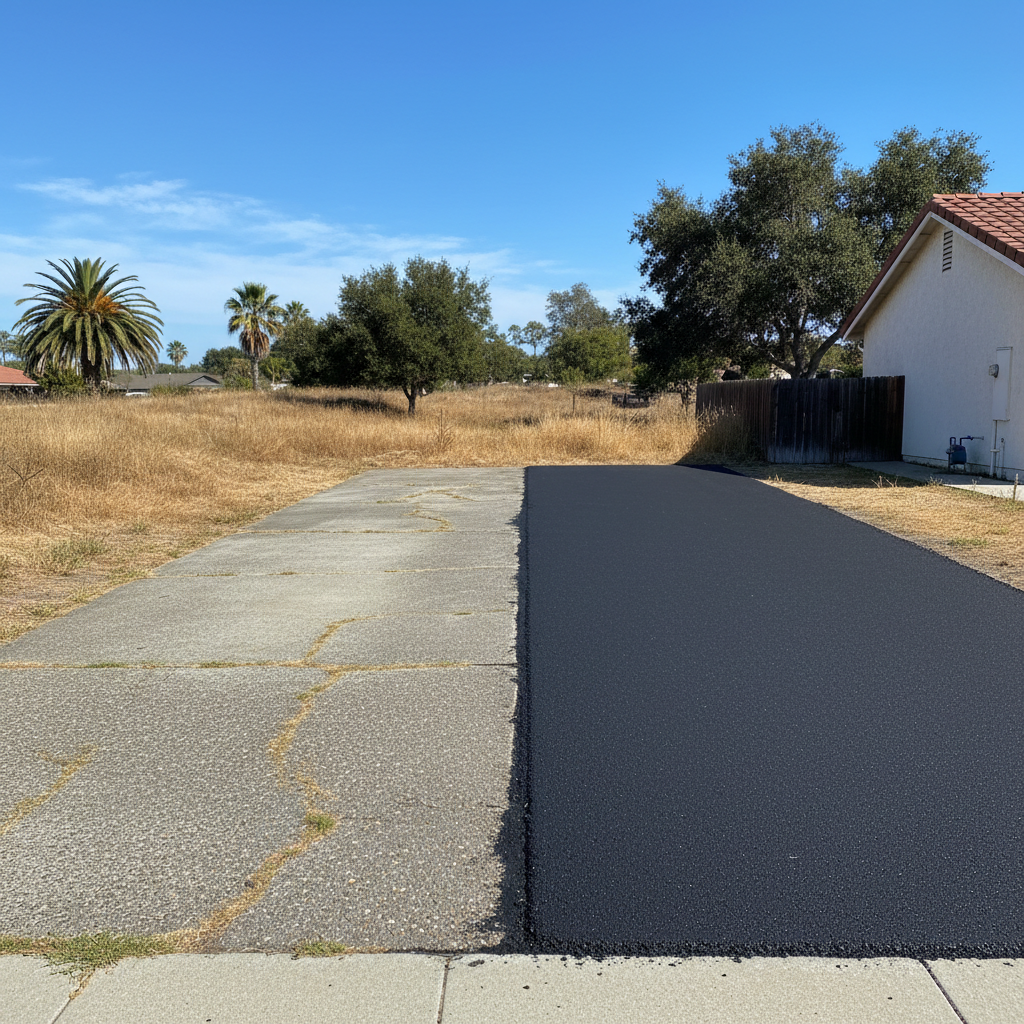
So, you're looking at your driveway, maybe it's just dirt and gravel right now, or maybe it's seen better days, cracked all over, and sinking in spots. You know you need asphalt, but you're wondering, what's the real difference between just putting down new asphalt on a fresh base versus completely tearing out an old one and starting from scratch? It's a common question I get from homeowners around Oceanside, especially those in areas like the coastal neighborhoods where soil conditions can be a bit tricky.
New Asphalt Installation: Starting Fresh
This is for when you've got a completely new area you want paved, or maybe you're replacing a concrete driveway with asphalt, or you're finally paving that dirt path to your garage. It's a clean slate, which sounds great, right? And it usually is, but there's a process.
The Process: First, we excavate the area to the proper depth. Then, we lay down and compact a good, solid aggregate base. This base is crucial; it's what provides the structural support for your asphalt. Think of it as the foundation of your house. After that, we apply the asphalt binder course, which is a coarser mix, and finally, the asphalt surface course, which is the smoother, finer mix you drive on. Each layer is compacted thoroughly.
Cost: Generally, new installation can be more expensive upfront than just replacing an existing asphalt surface. You're paying for all that excavation, the new base material, and the labor involved in building it up from scratch. However, it's an investment in a long-lasting, stable surface.
Durability: When done right, with proper drainage and a solid base, a new asphalt installation is incredibly durable. It's designed to last 20-30 years, sometimes more, with good maintenance. The key is that base layer; it dictates everything.
Maintenance: Just like any asphalt, you'll want to sealcoat it every 2-3 years after the initial curing period (usually 6-12 months). Promptly repair any cracks that show up. Good drainage is also a form of maintenance – make sure water isn't pooling on your new surface.
Appearance: It's a brand-new, smooth, black surface. It looks fantastic and really boosts curb appeal. You can't beat that fresh asphalt look.
Full Asphalt Replacement: The Complete Overhaul
Now, let's talk about full replacement. This is what you do when your existing asphalt driveway is beyond repair. We're talking widespread cracking, significant potholes, areas that have sunk or heaved, or drainage issues that can't be fixed with a simple patch or overlay. An overlay, by the way, is a different beast entirely – it's just putting new asphalt over old, which isn't always the right fix.
The Process: This starts with tearing out all the old asphalt. We remove it, haul it away, and then we assess the existing base. Sometimes, the base is still good, and we can just regrade and compact it. Other times, especially if you've had significant sinking or drainage problems, we might need to remove and replace portions or even all of the base material. After the base is prepped, the rest of the process is similar to a new installation: binder course, surface course, and compaction.
Cost: A full replacement can be comparable in cost to a new installation, sometimes even a little more due to the demolition and disposal fees. However, if your base is still in decent shape, you might save a bit on new aggregate material.
Durability: Just like a new installation, a full replacement, when the base is properly addressed, will give you excellent durability. You're essentially getting a brand-new driveway, built to last another couple of decades.
Maintenance: Same deal here – sealcoating, crack filling, and ensuring good drainage are your best friends for extending its life.
Appearance: Again, you get that fresh, smooth, dark asphalt look. It's a complete transformation from a beat-up, old driveway.
Which One Should You Choose?
Here's the deal: if you're starting from scratch, or if your current driveway is concrete, then a new asphalt installation is your path. Simple as that.
If you have an existing asphalt driveway that's just completely shot – I mean, it's got alligator cracking all over, big potholes, or it's sinking in multiple places because the base has failed – then a full replacement is what you need. Don't try to put lipstick on a pig with an overlay if the foundation underneath is crumbling. You'll just be throwing good money after bad.
The biggest factor in both scenarios is the base. A strong, well-drained base is the secret to a long-lasting asphalt surface, whether it's a new build or a full replacement. That's why we at Oceanside Precision Asphalt always take the time to properly prepare the subgrade and install or repair the base correctly. It's not the part you see, but it's the most important part.
If you're unsure, or you want an honest assessment of your specific situation, give us a call. We'll come out, take a look, and tell you straight what we think is the best and most cost-effective solution for your home here in Oceanside.