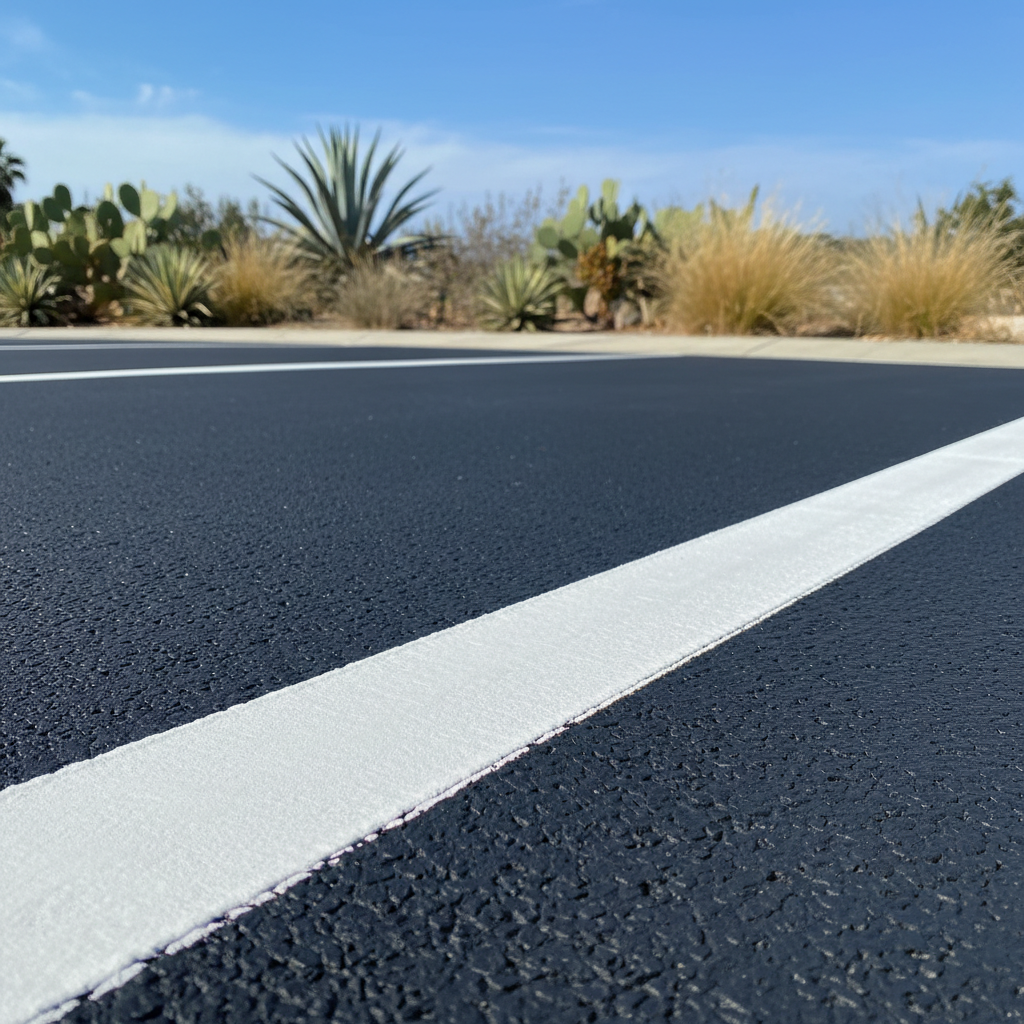
Do homeowners even need asphalt striping? I thought that was just for businesses.
That's a common thought, and honestly, for most single-family driveways, you're right – striping isn't usually a must-have. But there are definitely times when it makes a lot of sense for homeowners. Think about it: do you share a driveway with a neighbor, maybe with a specific parking agreement? Or perhaps you've got a basketball or pickleball court in your backyard that's looking a little faded, line-wise. I've even seen folks with really long, winding driveways who want to mark off areas for guest parking during parties, or clearly show where the turnaround is. It's all about safety, keeping things organized, and sometimes, just making your property work better for you.
What kind of paint do you use for residential asphalt striping? Is it different from commercial?
Good question. For asphalt, you can't just slap on any old house paint; it simply won't hold up. We use specialized traffic paint, which is made to be tough, weather-resistant, and able to really stick to asphalt surfaces. It's actually the same type of paint we'd use for a commercial parking lot, though the way we put it down might be a bit different depending on how big the job is. These paints are usually acrylic-based, dry fast, and are mixed to resist fading from the intense Southern California sun and, you know, the occasional marine layer we get here in Oceanside.
How long does asphalt striping last on a home driveway or court?
The life of asphalt striping really depends on a few things. First, how much action does it see? A basketball court getting used daily by a couple of teenagers will wear down faster than a guest parking spot that only gets used a few times a month. The quality of the asphalt underneath also matters – if it's super cracked or crumbling, the paint just won't stick as well. Generally, you can expect residential striping to last anywhere from 1 to 3 years, sometimes even longer if it's in a low-traffic spot and the surface is kept up. We always suggest a good sealcoat beforehand if your asphalt needs it; that gives us a fresh, smooth surface for the paint to grab onto, which really extends its life.
Can I stripe my own basketball court or parking area? What's involved?
You definitely *can* try to stripe it yourself, but I'll be honest, getting a professional-looking result is harder than it seems. If you're just doing a simple line or two, you might pull it off. You'd need to clean the surface really well, measure accurately, use chalk lines or string to guide you, and then put down the traffic paint with a roller or a special striping machine. The biggest headaches for DIYers are getting consistently straight lines, an even thickness, and making sure the paint adheres right without smudges or drips. For anything more complex than a single straight line, or if you want it to look crisp and professional, I'd honestly recommend calling in the pros. We've got the specialized gear – like those walk-behind striping machines – and the experience to get it done right the first time.
What's the process like when Oceanside Precision Asphalt does striping?
When you call us for striping, here's how it usually goes. First, we'll head out to your property to take a look at the area you want striped. We'll chat about what you're hoping for – whether it's parking spots, a sports court, or even just directional arrows. We'll measure everything up and give you a clear quote. Once we're ready to start the work, the first step is always cleaning the surface. Any dirt, debris, or loose gravel has to go, otherwise, the paint won't stick. Then, we carefully measure and mark out all the lines with chalk or string, making sure everything is perfectly straight and spaced just right. Finally, we apply the specialized traffic paint using our professional striping equipment. We work quickly to keep disruptions to a minimum, and the paint usually dries pretty fast, so you can use the area again soon after we're done.
Is there a best time of year to get striping done in Oceanside?
For striping, just like most asphalt work, the weather makes a big difference. We need dry conditions, and ideally, temperatures that aren't too cold. Here in Oceanside, that means most of the year is fair game, but the sweet spot tends to be spring through fall. We really want to avoid any chance of rain right after we've applied the paint, as that can wash away or smudge the fresh lines. Super hot days aren't great either, since the paint can dry too fast and not cure properly. The mild, sunny days we get for most of the year are perfect for making sure the paint adheres and cures correctly, giving you the longest-lasting results.
How much does residential asphalt striping cost?
That's the million-dollar question, isn't it? The cost for residential asphalt striping isn't a one-size-fits-all kind of answer. It really depends on the scope of your project. Are we talking about a couple of parking lines, a full basketball court, or something more intricate? The main things we look at are the total linear feet of striping needed, how many colors you want, and the condition of the asphalt surface. If the surface needs a lot of prep work, like extensive cleaning or minor repairs, that'll factor into the cost. We always provide a detailed, free estimate after we've seen your specific project, so you know exactly what to expect. We aim to be transparent and fair with our pricing, giving you quality work that lasts.