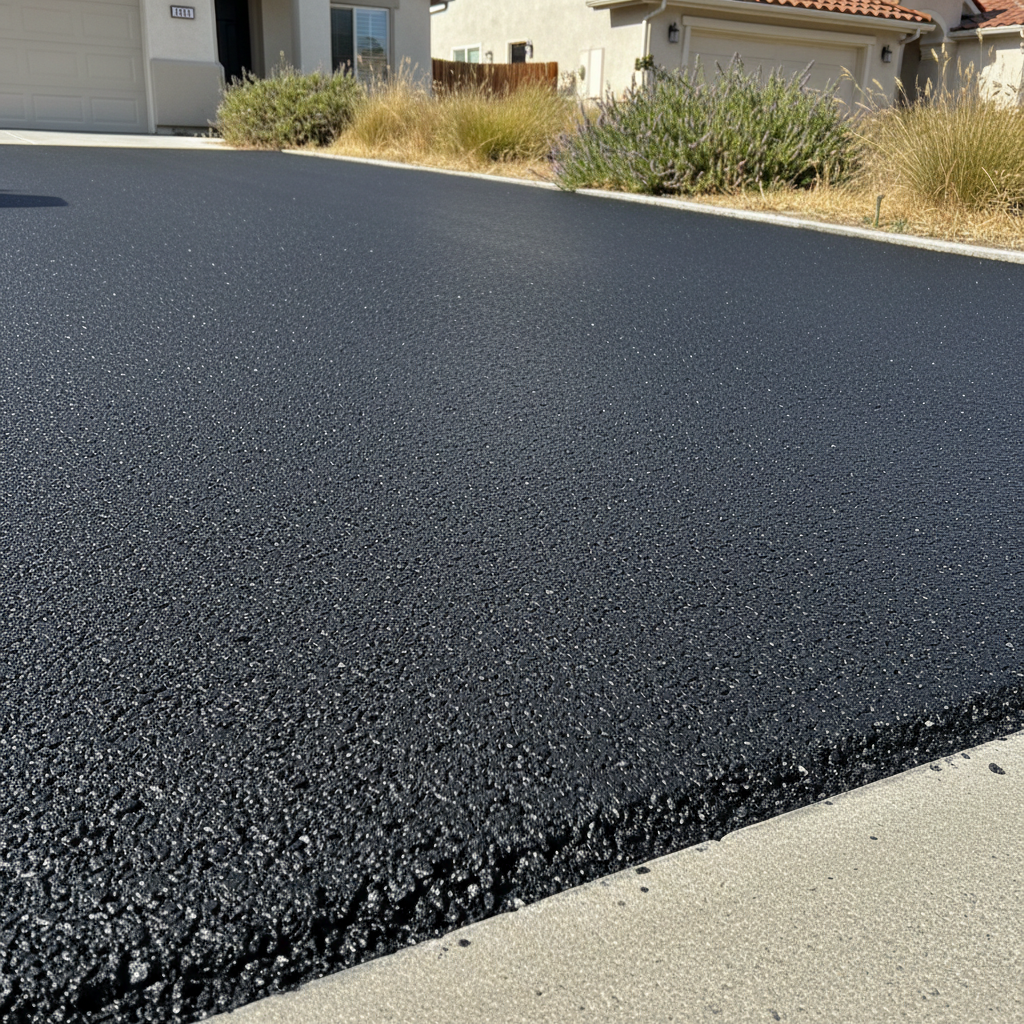
Running a business in Oceanside means you've got a lot on your plate. The last thing you need to worry about is your parking lot or access roads falling apart. But let's be honest, a lot of folks don't really know the ins and outs of commercial asphalt until they've got a problem. I've been doing this a long time here in North County, and I hear the same questions pop up again and again. So, I figured I'd lay it all out for you, straight from my experience at Oceanside Precision Asphalt.
What's the difference between residential and commercial asphalt?
That's a great question, and it's not just about size. Commercial asphalt, like what you see in a shopping center parking lot or an industrial park, is built to handle a lot more stress. Think about it: constant heavy vehicle traffic, delivery trucks, larger passenger vehicles, and just more cars in general. Residential driveways typically only see a few cars a day, maybe a moving truck once every few years.
Because of this, commercial asphalt usually has a thicker base layer, sometimes multiple layers, and a more robust asphalt mix. We're talking about different aggregate sizes and binder content designed for higher load-bearing capacity and durability. The subgrade preparation is also much more critical for commercial projects because any weakness there will show up quickly with heavy traffic. It's not just a bigger version of your home driveway; it's engineered differently from the ground up to withstand serious wear and tear.
How often should I really be maintaining my commercial parking lot?
Look, there's no single magic number, but I can tell you what I've seen work best. Ignoring your asphalt is a surefire way to pay a lot more down the road. For most commercial properties, you should be thinking about preventative maintenance every 2-5 years. This could mean crack sealing, sealcoating, or minor patching. If you've got a high-traffic area, like a busy retail center near the 5 freeway, you'll lean towards the shorter end of that spectrum. A less-used office park might stretch it a bit longer.
The key is regular inspection. Walk your lot monthly. Look for new cracks, potholes, or areas where the surface is starting to look faded and brittle. Catching small issues early is always cheaper than waiting for them to become big, expensive problems. A good sealcoat every few years, after addressing any cracks, can extend the life of your asphalt significantly by protecting it from UV rays, oil spills, and water intrusion.
What causes potholes in commercial lots, and how do you fix them?
Potholes are the bane of every property manager's existence, right? They're usually caused by a combination of water getting into cracks, freezing and expanding (though less of an issue here in Oceanside than, say, the mountains), and then traffic driving over the weakened area. The water softens the subgrade, and the weight of vehicles breaks up the asphalt above it. Here in Oceanside, it's often more about water intrusion from rain or irrigation, combined with the constant pounding of cars and trucks, especially in areas with poor drainage.
For fixing them, a temporary patch might involve just filling it with cold mix asphalt, which is quick but not a long-term solution. For a proper, lasting repair, we'll cut out the damaged section in a square or rectangle, clean out all the debris, ensure the base is stable, and then fill it with hot mix asphalt, compacting it thoroughly. Sometimes, if the problem is widespread, you might need a larger patch or even a section replacement. It all depends on the extent of the damage and the underlying cause.
Is it better to repair or replace a section of my asphalt?
This is where my experience really comes into play. It's a judgment call, but here's how I usually break it down. If you've got isolated potholes or a few long, linear cracks, targeted repairs like patching or crack sealing are often the most cost-effective solution. We're talking about fixing specific problem areas without disturbing the healthy parts of your pavement.
However, if you're seeing widespread alligator cracking (that's when it looks like alligator skin), significant rutting, or large areas of crumbling asphalt, then just patching isn't going to cut it. That usually indicates a failure in the base layer or the asphalt itself has reached the end of its life. In those cases, removing and replacing that section, or even considering an overlay for the whole lot if the base is still good, is the smarter long-term investment. You want to fix the root cause, not just put a band-aid on it. I'll always give you an honest assessment of what I think will give you the best value and longevity.
How long does a new commercial asphalt lot last in Oceanside?
A well-installed and properly maintained commercial asphalt lot here in Oceanside can last anywhere from 15 to 25 years, sometimes even longer. But that's a big 'if.' The lifespan heavily depends on a few critical factors:
- Initial Quality of Installation: Did the contractor properly prepare the subgrade? Was the asphalt laid at the correct thickness and compacted correctly? This is foundational.
- Traffic Volume and Type: A lot that sees constant semi-truck traffic will wear out faster than one used primarily by light passenger vehicles.
- Maintenance Schedule: This is huge. Regular crack sealing and sealcoating can add years, even a decade, to your pavement's life. Neglect it, and you'll be looking at major repairs much sooner.
- Drainage: Water is asphalt's worst enemy. Good drainage prevents water from sitting on the surface or seeping into the base. Here in Oceanside, especially with our occasional heavy rains, ensuring proper water runoff is crucial.
- Soil Conditions: Some areas, like parts of coastal Oceanside, can have expansive soils. Proper subgrade treatment is essential to mitigate these issues and ensure a stable foundation.
Without good maintenance, you'll likely see issues cropping up around the 8-12 year mark. With it, you can push that much further.
What should I look for when hiring a commercial asphalt contractor?
Don't just go with the cheapest bid, I'm telling you. That's a recipe for headaches down the road. Here's what I recommend:
- Experience with Commercial Projects: Residential and commercial are different beasts. Make sure they've got a solid track record with commercial-sized jobs. Ask for references and drive by some of their completed projects.
- Proper Licensing and Insurance: This is non-negotiable. They need to be licensed (C-32 Paving and Surfacing in California) and fully insured. You don't want to be liable if something goes wrong.
- Clear Communication: Do they answer your questions thoroughly? Do they explain the process? A good contractor will keep you in the loop.
- Detailed Bid: A good bid isn't just a number. It should break down the scope of work, materials used, timelines, and any warranties. If it's vague, be wary.
- Local Knowledge: Someone who knows Oceanside's specific climate, soil types, and local regulations is a huge plus. We understand how the coastal air or specific soil conditions here can impact asphalt performance.
At Oceanside Precision Asphalt, we pride ourselves on hitting all these points. We're not just laying asphalt; we're building relationships and ensuring your business has a solid foundation, literally.