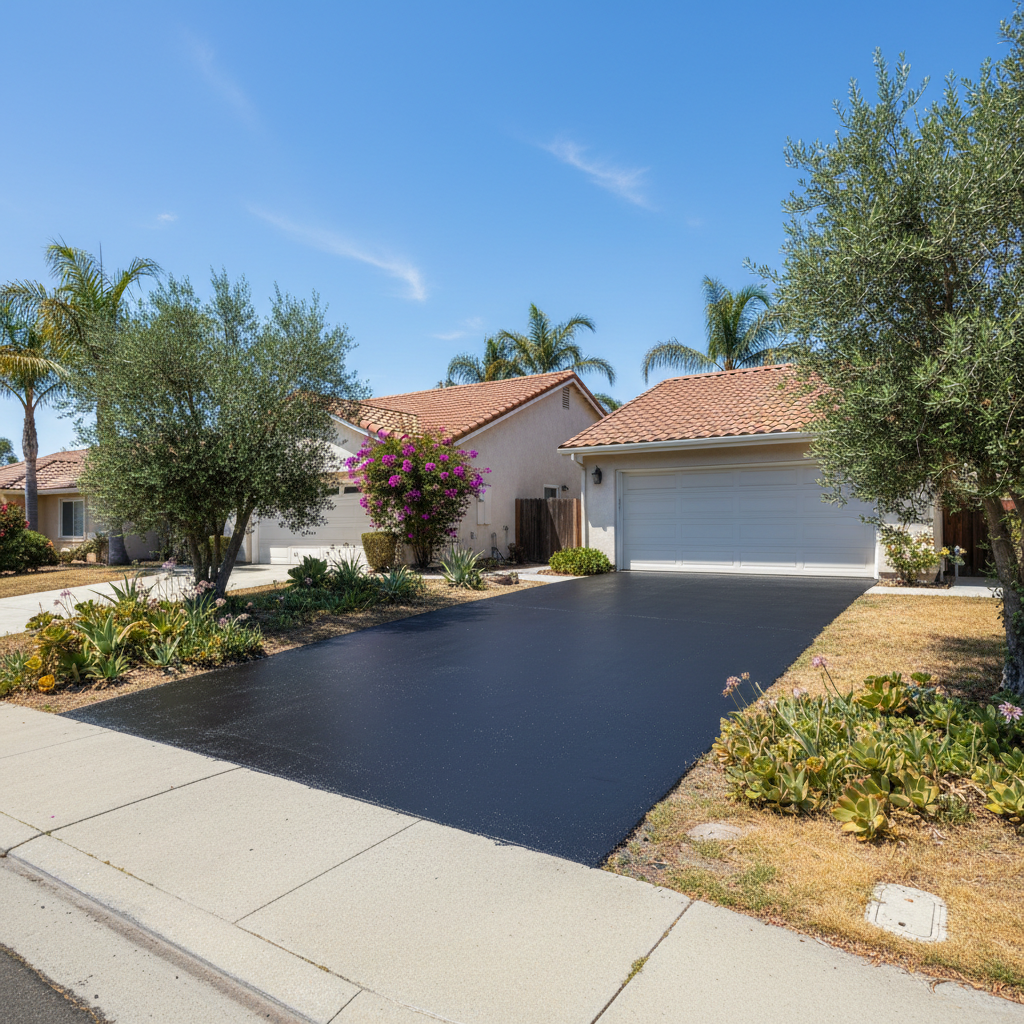
So, you've gone ahead and sealcoated your asphalt driveway or parking lot. Good move! Especially here in Oceanside, where the sun and salty air can really beat up pavement. But getting it done is just the start. If you want that fresh, dark finish and the protection it offers to actually last, you've got to take care of it. Think of it like painting your house; you wouldn't just paint it and then forget about it, right? Same deal with your asphalt.
Making Your Sealcoat Last Longer
The biggest thing you can do right away is let it cure. I tell all my clients at Oceanside Precision Asphalt: stay off it for at least 24 to 48 hours after we apply it. Sometimes, if it's a cooler, shadier spot, or we've had some marine layer fog rolling in from the coast, it might even need a bit longer. Don't rush it. Driving on it too soon can leave tire marks, scuffs, or even pull up the fresh sealcoat. That would really defeat the whole purpose, wouldn't it? Just let it harden up properly.
Once it's cured, try to keep harsh chemicals away from it. Things like gasoline spills, oil leaks, or even some really strong cleaning detergents can break down the sealcoat over time. If you do have a spill, clean it up fast with just some mild soap and water. Don't let it sit there and soak in. Also, be careful with heavy, sharp objects. Dragging a barbecue grill across your driveway or dropping a heavy tool can chip or scratch the surface. It's tough stuff, sure, but it's not indestructible.
Regular Maintenance: Your Asphalt's Best Friend
Keeping your sealcoated asphalt in good shape isn't rocket science, but it is important. First off, keep it clean. Sweep off loose dirt, leaves, and other debris regularly. This stops organic matter from breaking down and staining the surface. Plus, it keeps abrasive grit from getting ground into the sealcoat by tires and foot traffic. Hosing it down every now and then is also a good idea, especially if you live closer to the beach where sand can pile up.
Another thing to watch out for? Weeds. They're sneaky little things, and they'll find any tiny crack or imperfection to sprout through. Pull them out as soon as you see them, or use a weed killer made specifically for paved surfaces. Don't let them get established, because their roots can widen small cracks and undermine your sealcoat and the asphalt underneath. What a headache!
Signs of Trouble to Watch For
Even with the best care, you still need to keep an eye out for problems. Small cracks are usually the first thing to show up. If you see hairline cracks starting to form, especially 'alligator' cracking — that's a network of small cracks that looks like alligator skin — it's a sign the sealcoat is wearing thin or the asphalt underneath is starting to go bad. You need to fix these before they get bigger and let water seep into the base layer. Trust me, that's a real mess.
Another warning sign is if it starts to fade or looks dull and gray. Your sealcoat should be a rich, dark black. If it's looking faded, that means the protective layer is breaking down from UV exposure and oxidation. This usually tells you it's time for a fresh application. Potholes, of course, are a huge red flag. If you see one, it means water has gotten under the surface and messed up the base. Don't ignore them; they just get worse.
When to Call a Professional
You should call a pro like me at Oceanside Precision Asphalt when you spot those warning signs. If you've got cracks that are more than a quarter-inch wide, or if you're seeing lots of alligator cracking, it's time for professional crack filling and possibly another sealcoat application. Please don't try to patch large cracks yourself with a tube of caulk; it just won't hold up.
If your sealcoat is looking really faded and dull, it's probably been two or three years since the last application, and it's time for a refresh. That's the typical lifespan here in Southern California, given our intense sun. We can check its condition, clean the surface properly, and put down a fresh coat that will protect your asphalt for another few years. And definitely call us if you have any potholes. Those need proper repair, not just a quick fix, to stop further damage and make sure your driveway is safe and works right.
Taking care of your sealcoated asphalt isn't brain surgery, but it does need a little attention. A small amount of effort now can save you a lot of money and headaches down the road. It's worth it.